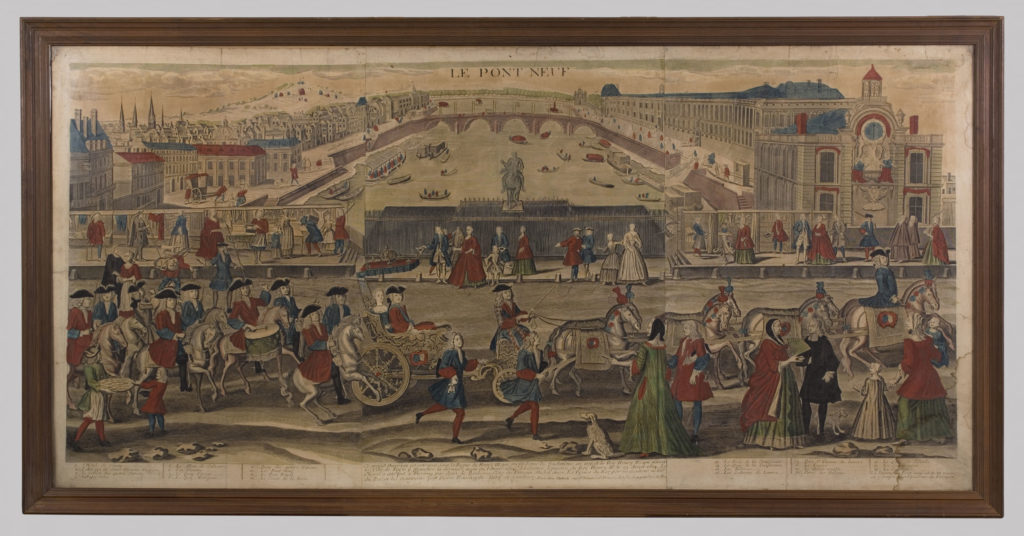
The Palace of Fontainebleau, home to French kings and queens for more than five centuries, has seen its share of royal intrigues and scandals. But never had the walls been stained with blood as they were on a cold autumn day in 1657, when one of the queen of Sweden’s men lay dying, bleeding to death, on the marble floor in the grandiose Galerie des Cerfs.
Christina, Queen of Sweden
Christina, Queen of Sweden was born in 1626, to Gustav II Adolf, king of Sweden, and Maria Eleonora of Brandenburg. She was the only surviving child of four births, and therefore proclaimed heir to the Swedish throne on the death of her father in 1632. She ascended to the throne in 1633 (under the control of five regents until she turned 18)
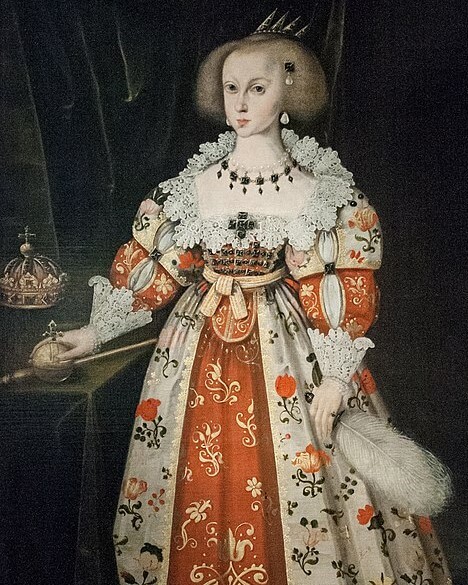
“The people were amazed by my grand manner, playing the role of a queen already. I was only little, but on the throne I had such an air, such a grand appearance, that it inspired respect and fear in everyone…”
As she grew older, not yet able to take responsibility for the country, she was given the education of a prince; she learnt the “art of government”, the Scriptures, foreign languages, horse riding, and most importantly, table manners.
Christina, like many Swedes, greatly admired the Protestant English queen Elizabeth I, her strength of mind and her mastery of statecraft. But rather than support women, she believed that women were weak “in soul and body and mind” and a capable female leader was the exception rather than the rule.
As a young girl I had an overwhelming aversion to everything that women do and say. I couldn’t bear their tight-fitting, fussy clothes. I took no care of complexion or my figure or the rest of my appearance. I never wore a hat or a mask, and scarcely ever wore gloves. I despised everything belonging to my sex, hardly excluding modestly and propriety. I couldn’t stand long dresses and I only wanted to wear short skirts.
Christina’s gender has long been the point of speculation. When she was born, the midwives initially proclaimed she was a boy, and it was only after more careful examination it was revealed she was in fact a baby girl.
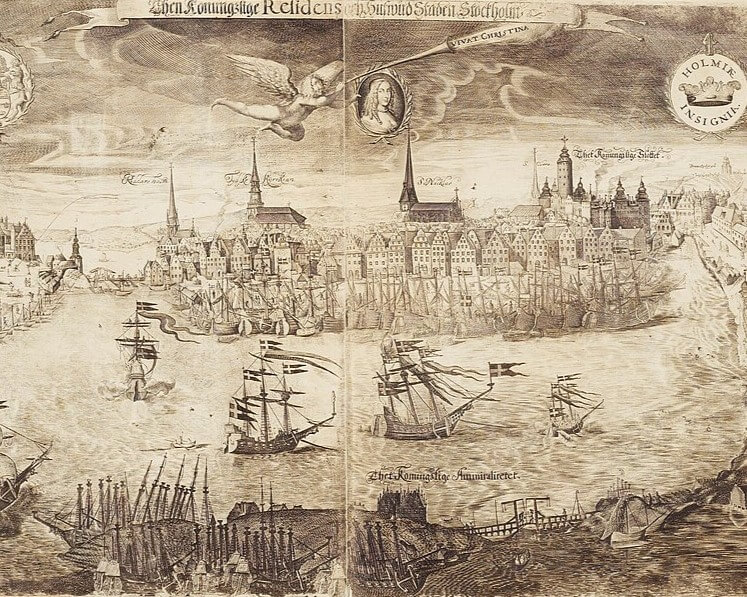
Sweden at this time was small, with around a million inhabitants. They produced little, and most of the nobles lived very simple lives. The official religion was Protestantism.
The coronation
When she turned eighteen, Queen Christina was determined to rule in her own right. Young and inexperienced, she refused to listen to Swedish statesmen and took on the advice of the French Ambassador, whom of course only had the interests of the French in mind. She was naïve, and over the years would be taken in by various men, some of them infamous conmen, others lovable rogues, but all of them saw how easily she could be manipulated.
However, she would not be moved on one thing – she would not marry. She declared that she could not bear to be used by a man the way a peasant uses his fields. She walked and talked like a man, she was rowdy and bawdy, and she was determined not to submit to marriage like a woman. Strongly encouraged by the parliament to marry her cousin, Karl Gustav, she stated baldly that she had absolutely no intention of ever marrying anyone, and declared in 1649 that Karl would be her successor to the throne instead.

French influence was strong in Sweden under the queen’s rule. Scholars and professors, writers and philosophers made Sweden their temporary home, showered with money for their ideas. The most famous was the philosopher René Descartes, personally invited by Christina, but unfortunately he died of pneumonia and was buried there. Christina spent money lavishly and wildly, and with the French influence the Swedish nobles followed suit.
At Christina’s official coronation in 1650, the French had a starring role – not the people, but the regal regalia which had all been made in Paris. The gold and velvet carriage, a throne, her horse’s pearl encrusted saddle, jewelled gifts for hundreds of people all came from ateliers and workshops in France. As did the four-metre-long coronation robe, which was an extraordinary creation of purple velvet lined with ermine, trimmed with pearls and laden with circles of solid gold crowns.
A queen in name only
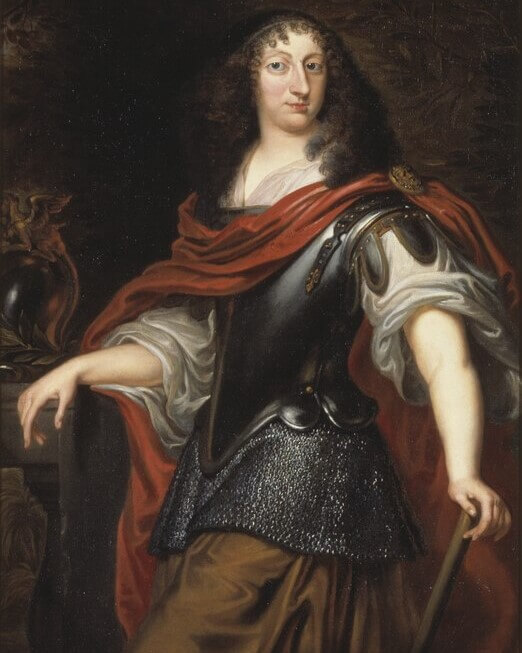
However, only one year after such a magnificent display, Christina, quick to lose interest in the day to day running of a country, and tired of the pressure to marry, decided to abdicate. The new king would be her cousin, Karl Gustav. Despite the parliament’s refusal to accept her renouncing her birthright, she spent three years preparing to leave her homeland, her kingdom. After an abdication ceremony which was a complete reversal of her coronation, she was 27 years old, free, and headed for Rome.
Why Rome? Queen Christina, as she still insisted she was called, had converted to Catholicism and believed Rome was now where she belonged. She arrived there in 1655, whereupon she immediately met the Pope and was given all kinds of luxuries. However, within a year it seemed she regretted her decision to renounce her own throne, or perhaps she was just missing the limelight, as she became embroiled in a secret French plot to install her as the queen of Naples. (Naples at this time was under Spanish control). The Pope, already tired of Christina’s shenanigans, was happy to see her on her way to France, where she intended to speak to the king, Louis XIV, about the secret plans.
The Queen in Paris
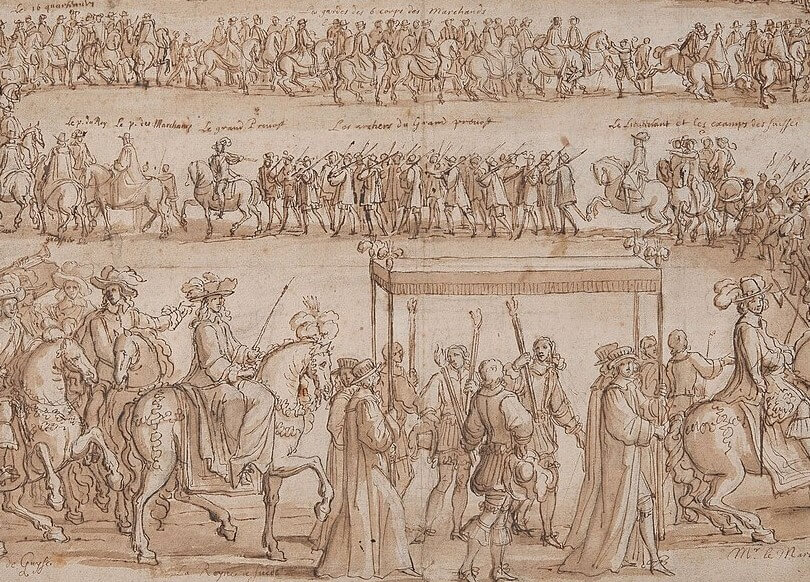
From Marseille to Paris, from Chantilly to Compiègne, Christina was greeted with the pomp and fanfare as befitted a queen. However, her clear lack of money, her bizarre mix of men and women’s clothing and unguarded way of speaking her mind endeared her little to the formal and rigid French court. At the end of her stay in Compiègne with the king, Mademoiselle (Montpensier) noted:
“off she went, this Swedish amazon, followed by her pathetic little troupe, without any retinue, without any grandeur, without a bed, without any silver plate, without any mark of royalty.”
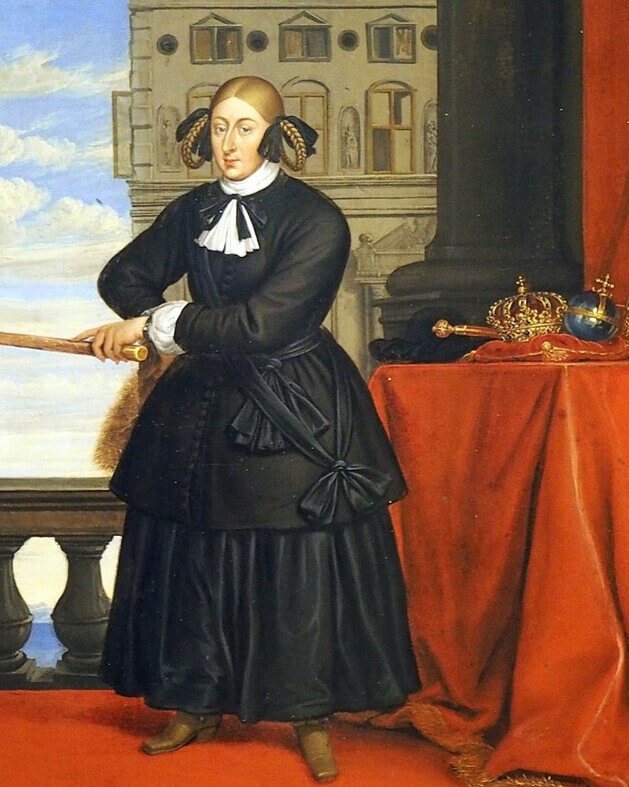
Christina’s “little troupe” was made up of only three men and two serving women. The men were all aware of the secret plan for the queen to seize Naples. The most distinguished of the men was the Marchese Monaldeschi. He came from a family of minor nobles and had managed to ingratiate himself into the queen’s favour, so much so that he was her Grand Ecuyer or Master of the Horse. The other two men were Francesco Santinelli and his brother Ludovico, both loyal to the queen and hoping for real power in Naples.
On her return to Italy, however, Christina heard with some dismay that her triumphant taking of the throne of Naples may be in jeopardy. Determined to receive the land and power she had been promised and felt she was entitled to, she made her way once again to France, accompanied by Monaldeschi and Ludovico Santinelli. She felt frustrated and humiliated and wanted to be taken seriously as a sovereign.
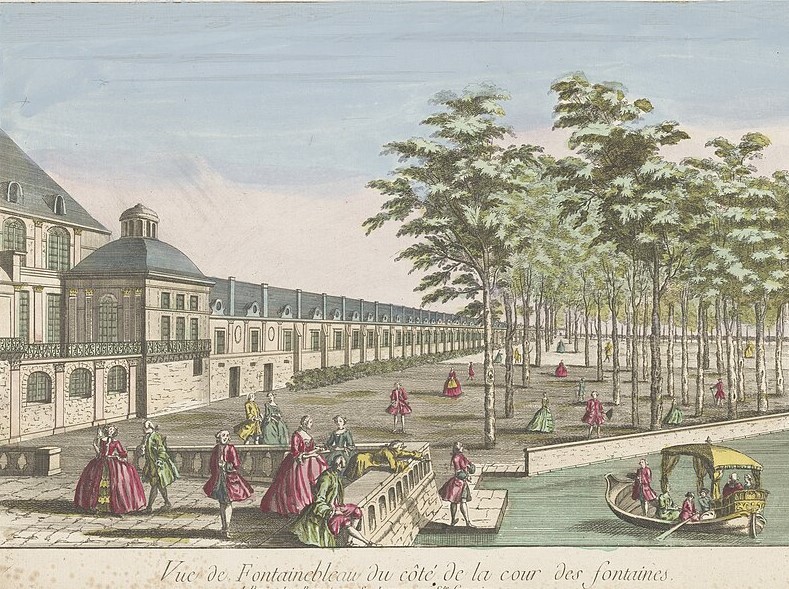
The queen at the palace of fontainebleau
Waiting to be invited to the court of Louis XIV in Paris, the queen was given a suite of rooms at the magnificent château of Fontainebleau. Over one hundred years before, François I had built this elegant palace as a late summer retreat, where the royal court could spend their days hunting and their nights watching theatre and entertaining themselves. Inside, the rooms and galleries were sumptuously decorated and the large formal gardens were sublime. An enormous forest filled with game surrounded the town.
It was a beautiful palace which would very soon see a murder.
For several months, Christina believed that someone had been intercepting her mail and took action so that she would receive directly all letters addressed to her or her household. Monaldeschi became aware of this and saw it as an opportunity to remove his rival, Francesco Santinelli. He forged a number of letters which were disparaging to the queen and signed them with Santinelli’s name. These letters would prove to be his (and the queen’s) undoing.
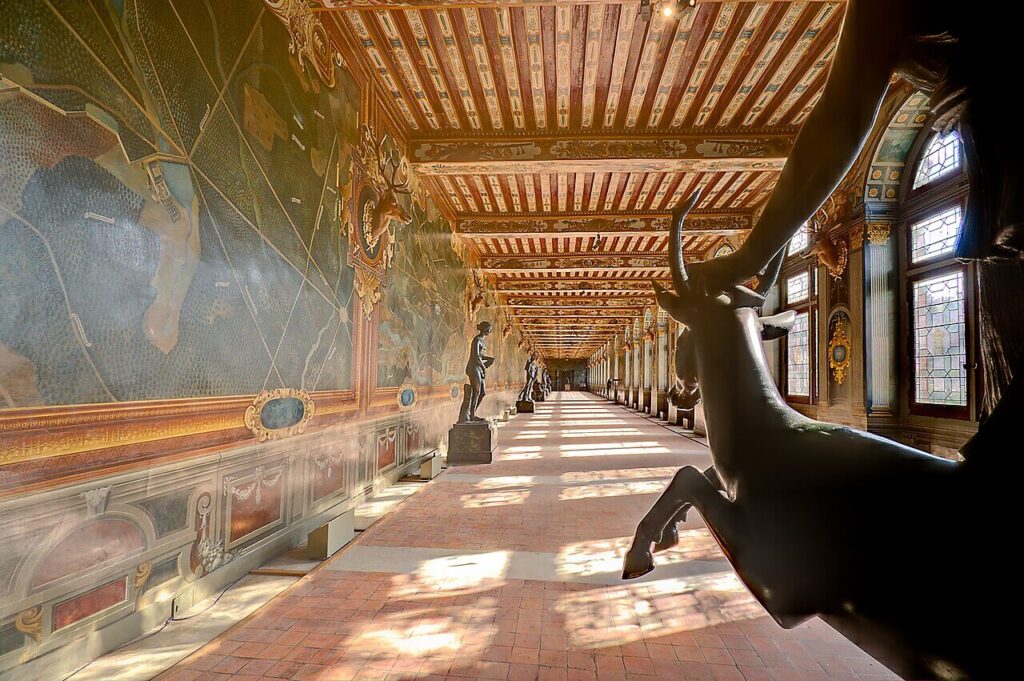
Christina’s rooms were in the château’s conciergerie, next to the famous Galerie des Cerfs, named for the great number of stags’ heads mounted on the walls.
the day of the murder
On 10 November 1657, the queen Christina imperiously summoned her men to this grand Galerie, in the presence of Père Le Bel, the prior of the monastery at Fontainebleau. The forged letters were shown to the marchese Monaldeschi and she denounced him as a traitor. The marchese desperately insisted he was innocent and that the letters were copies of those Santinelli had written himself. Seeing that she was unmoved by his entreaties, he fell at her feet and begged for forgiveness. Several hours passed where the marchese and the queen walked up and down the long gallery, passing the imposing hunting trophies and the stately birds eye views of royal palaces and châteaux painted on the walls.
Finally, the queen turned to the priest Père Le Bel.
“Reverend Father, you are my witness that I am not acting in haste or without good reason, I have allowed this faithless man more time and more opportunity than he has any right to ask, to justify his actions to me… I shall now withdraw. I leave this man to you. Prepare him for death, and take his soul under your protection”
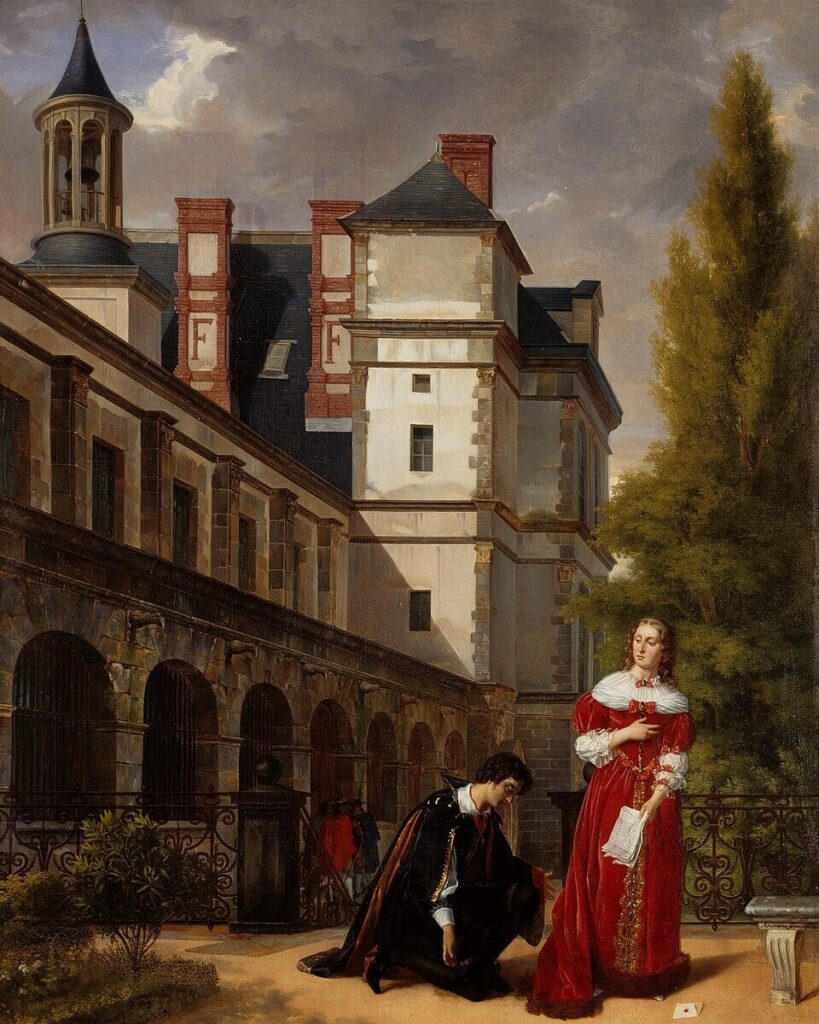
The priest begged Christina to have mercy, but she would not be moved. In her rooms next to the Galerie des Cerfs, she was perfectly calm as she pointed out that as queen she had the right to judge and execute her own subjects.
The unhappy priest returned to the Galerie des Cerfs, embraced Monaldeschi and enjoined him to think of his eternal salvation. Not long after, Ludovico Santinelli raised his sword and cried “Pray for forgiveness, Marchese! You are about to die!” He shoved Monaldeschi along the long corridor until they were both underneath a painting of the Château de Saint-Germain, where he thrust the sword into the marchese’s stomach. Monaldeschi grasped at the sword and in doing so, three of his fingers were cut off. Seeing he was wearing chain mail under his clothing, Ludovico struck his face. Another man came forward and hit him on the head, knocking out a piece his skull. He then attacked his neck but with little damage.
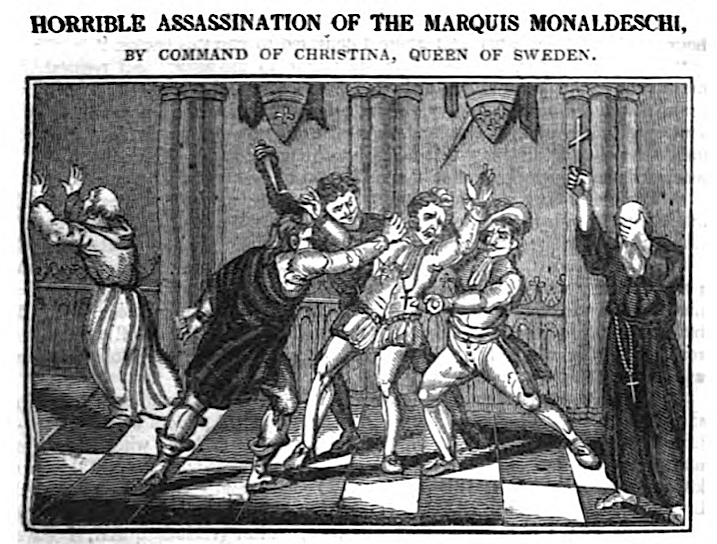
Monaldeschi’s agonies were far from over. The queen’s personal chaplain entered the room and the marchese dragged himself along the floor, imploring for mercy and making his confession. As the chaplain left the room to speak once more with the queen, one of the men immediately ran forward brandishing his long, narrow sword and stabbed the bleeding man through the throat. He took fifteen minutes to die and was in a freshly dug grave within two hours.
It was a ghastly, gruesome murder and while the bloodstains were quickly washed away, the marks were still evident months later.
Monaldeschi’s true purpose in writing the letters will never be known as it is believed Christina burnt them soon after she had him killed. The queen can have had little concern for damage to her reputation; she was more concerned that his treachery involved revealing the secret plans for the French to invade Naples and place her on the throne, and for this, there was no possibility of a queen’s pardon.
At the French Court, Madame de Motteville noted:
Everyone at court is horrified by such a hideous revenge, and those who praised the Queen before are now ashamed of it. The King and his brother hold her responsible, and the Cardinal is astounded. Really, we are all horrified…
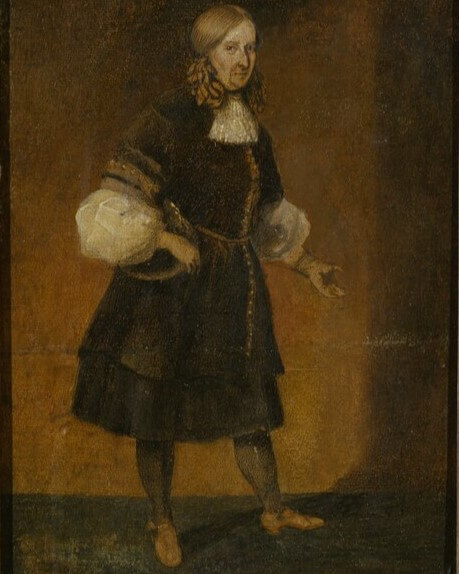
Long live queen christina
Queen Christina remained unrepentant. Forced to remain at the palace of Fontainebleau, next to the Galerie des Cerfs for three long winter months, in her queenly arrogance or naïveté she still believed in the French plan to hold Naples. After a brief sojourn in Paris where she was shunned at almost every door, she returned to Rome. The Pope, however, had denounced Christina as a barbarian and she faced hostility there as well. Christina didn’t really care; she was only waiting to lead the French army and take her rightful seat as Queen of Naples.
But this was never to happen. France and Spain made peace in 1659 and the following year, the king Louis XIV married Marie Teresa, the infanta of Spain.
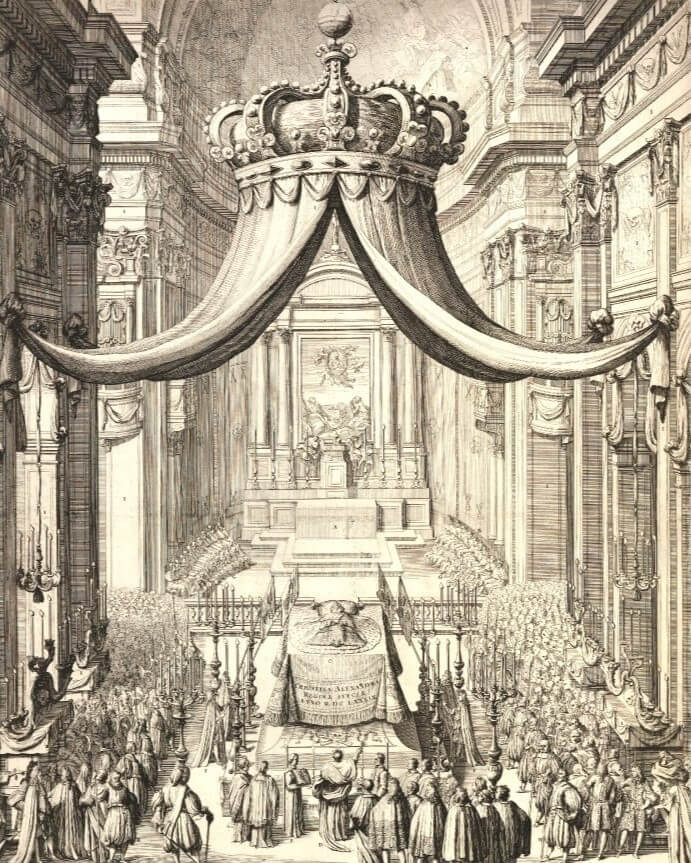
Christina continued to involve herself in the politics of 17th century Europe, living off the largesse of the pope, various benefactors and her Swedish lands, although she was always short of money. She spent the rest of her life in Rome before she died in 1689. Despite her notoriety she was still a queen, and her funeral was a grand affair. Her tomb is in Saint Peter’s Basilica.
Sources
Veronica Buckley, Christina, Queen of Sweden, Fourth Estate, London, 2004
All images unless otherwise stated are in the public domain.
Further links
Have you visited the magnificent Palace of Fontainebleau? Click below for tours and visits (affiliate link).